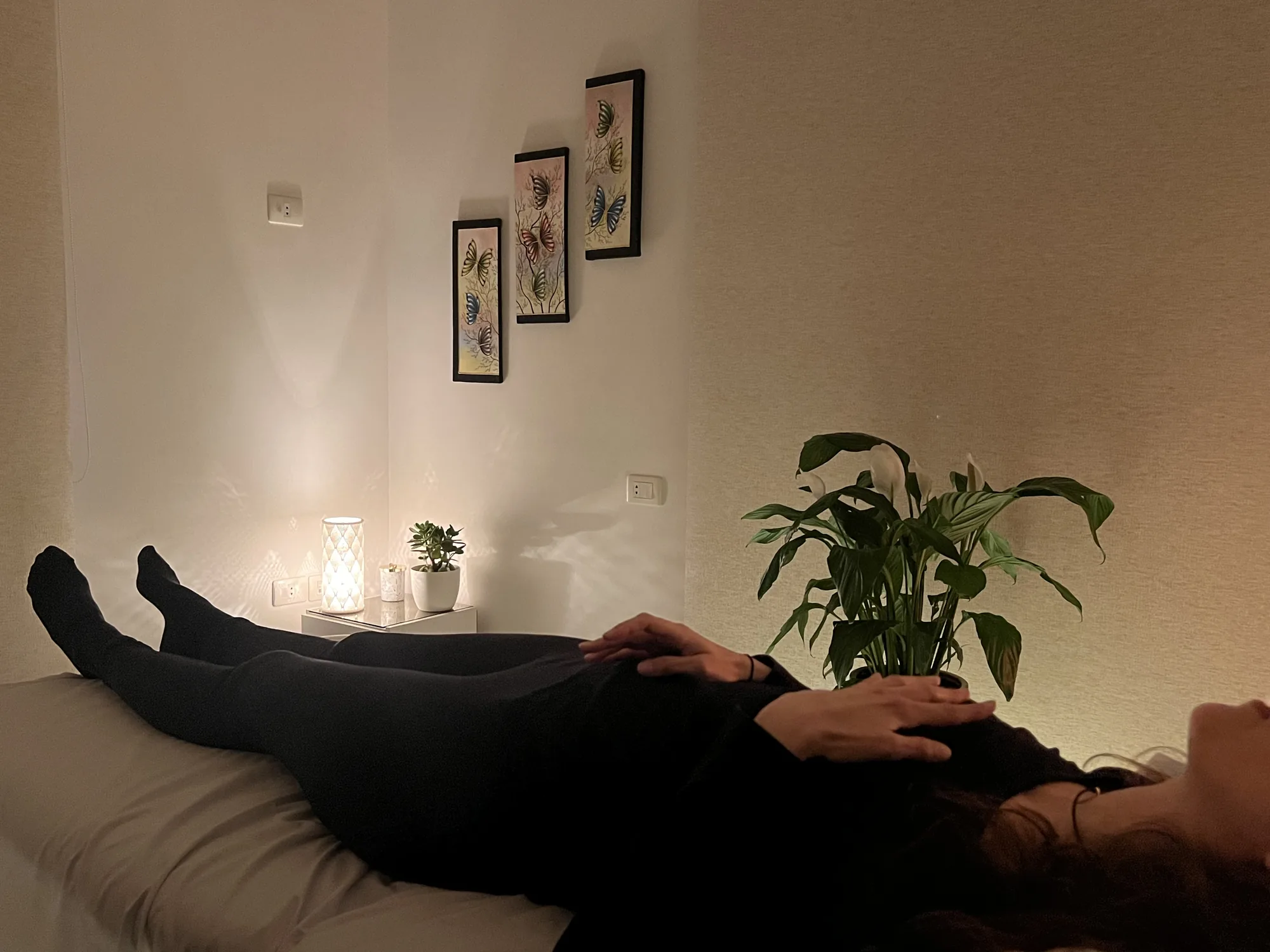
Breathing is the only part of the autonomic nervous system you can operate on purpose. Your heart rate, digestion and stress hormones run without your input, but breath sits on the boundary - automatic when ignored, controllable when you attend to it.
That is the whole basis of breathwork, and it is less mystical than it sounds.
The mechanism, briefly
When you are under threat, breathing becomes fast and shallow and moves up into the chest. This is useful when the threat is immediate. The problem is that the relationship runs both ways: breathing in that pattern signals threat back to the body, whether or not anything is actually wrong.
For anyone living with sustained, low-level stress - a category that includes a great many people in Beirut - that loop can stay switched on for months. You are not in danger, but your body has not been told.
Slow breathing, particularly with a longer exhale than inhale, stimulates the vagus nerve and shifts the body toward its rest state. Heart rate drops. Digestion resumes. The measurable effects are real and reasonably well documented.
What a session involves
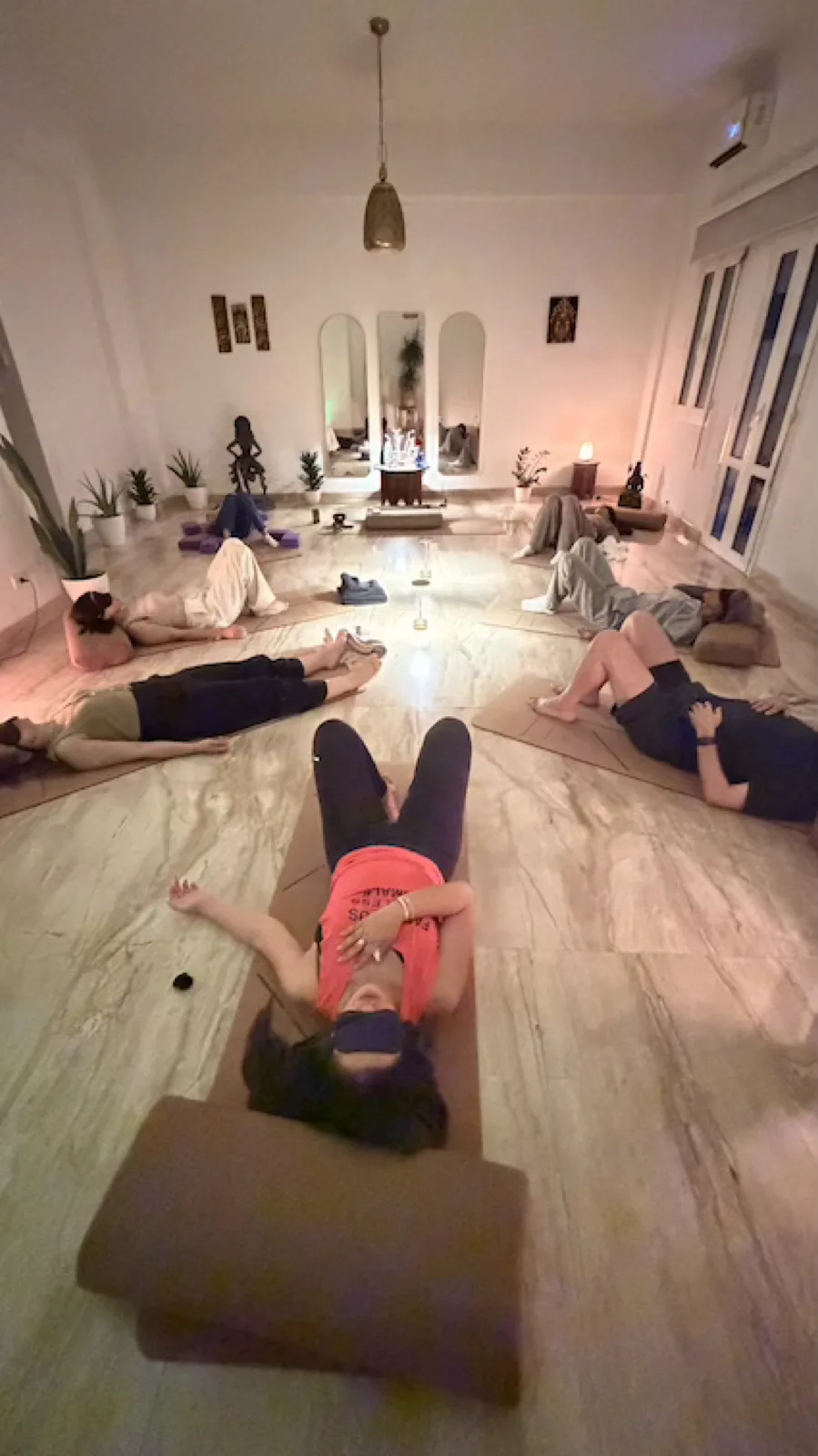
A guided session is unlike ordinary relaxed breathing. You lie down and follow a specific rhythm for an extended period - sometimes gentle, sometimes deliberately intense.
Regulating techniques use slow, even breathing with an extended exhale to settle the nervous system directly. These are calm throughout, and are what we usually start people with.
Activating techniques, including Transformational Holistic Breathing, use faster and deeper breathing sustained for a long stretch. These do not feel calming while they are happening. They can be physically and emotionally intense, and they are the ones that produce the dramatic accounts people have read about.
What actually happens in an intense session
Being straightforward about this matters, because arriving unprepared is unpleasant.
Sustained rapid breathing changes blood carbon dioxide levels, and that produces reliable physical effects: tingling in the hands and face, and sometimes tetany - hands and mouth cramping into fixed positions. This is alarming the first time. It is temporary, harmless, and resolves within minutes of breathing normally.
Emotionally, strong feeling often surfaces without an accompanying story. People cry, shake, laugh, or feel waves of something they cannot name. This is the intended effect rather than a malfunction, and it is why a facilitator stays with you throughout.
Afterwards, most people describe a distinct lightness, and often unusually good sleep that night.
Who should not do this
This is the part usually buried at the bottom of the page, so here it is plainly.
Do not do intense breathwork if you are pregnant, have a cardiovascular condition or high blood pressure, have epilepsy, have glaucoma or retinal detachment, have had a stroke or aneurysm, are managing psychosis or bipolar disorder, or have recently had surgery.
If you have a trauma history, tell the facilitator before you begin. Breathwork can bring up a great deal quickly, and it should be approached with support in place rather than encountered by surprise.
If you are unsure, gentle regulating breathwork carries almost none of these concerns and is available to nearly everyone.
What it is not
Breathwork is not a treatment for anxiety disorders, depression or PTSD, and it is not a replacement for therapy or medication. It can sit alongside those things usefully. It cannot stand in for them, and anyone claiming otherwise is overselling.
It is also not a single fix. One intense session can produce a striking experience, but the lasting benefit for stress comes from regular, unremarkable practice - a few minutes of slow breathing most days.
Something to try now
Sit down. Breathe in through your nose for four counts. Out through your mouth for six. The exhale being longer is the active part.
Do that for two minutes.
It will not change your life. But it will change your heart rate in the next ninety seconds, and noticing that is the point: the lever is real, and it is available to you at any moment, for free.
Rise Flow Heal offers guided breathwork at our studio in Tabaris, Beirut, from $80, and Transformational Holistic Breathing in groups from $60. Sessions run in English, French and Arabic. If any of the cautions above apply to you, tell us when you book and we will guide you toward the gentler practices.