Most people book a massage by picking the word they recognise. It works out about half the time.
The types are genuinely different — different pressure, different purpose, some done clothed, some not, one of them barely involving pressure at all. Here is what each one is for, so you can book the one that matches the problem.
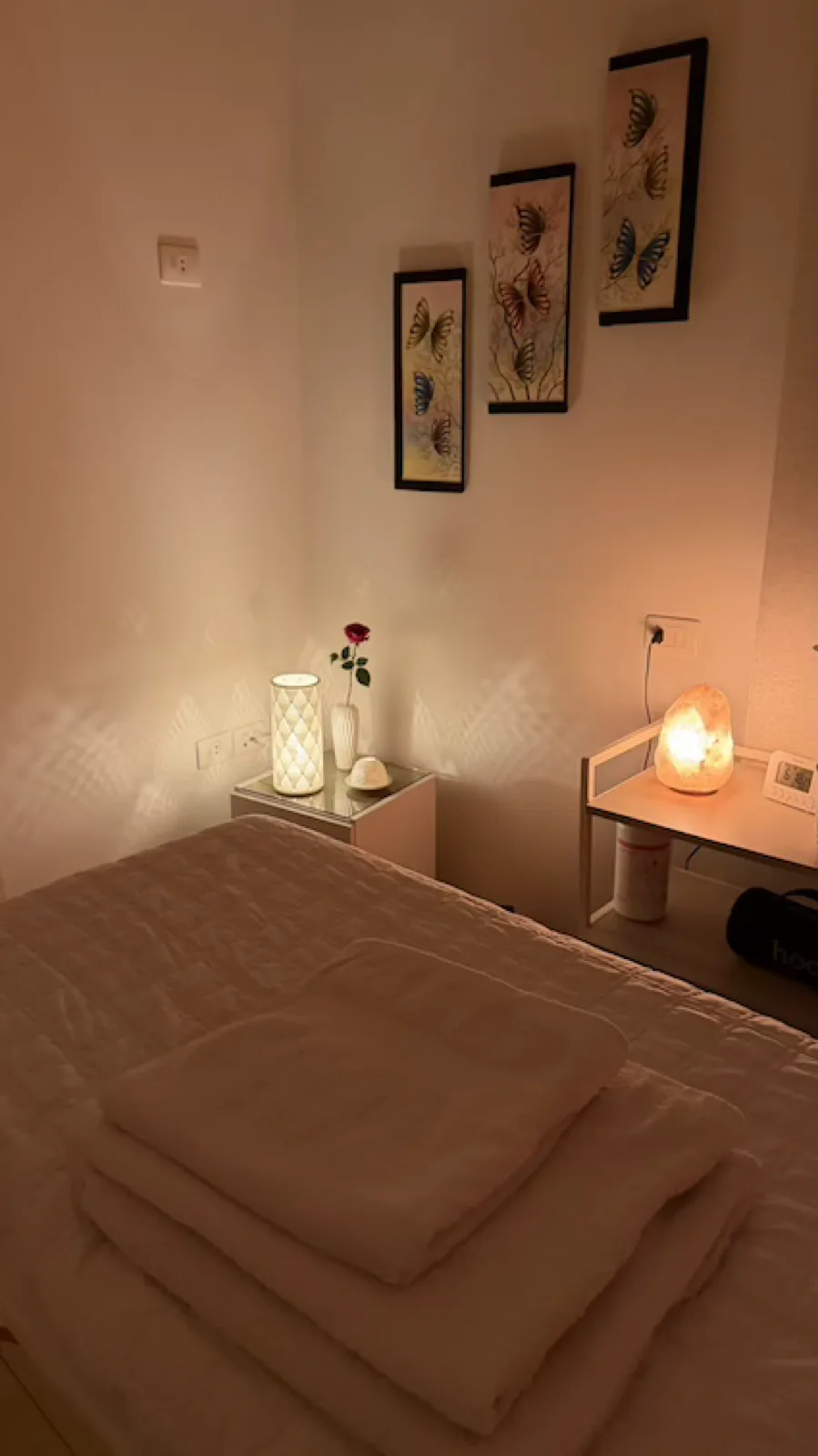
Start with the honest question
Before choosing a type, answer this: do you want to relax, or do you want something specific to stop hurting?
Those two goals pull in opposite directions, and the most common disappointment we see is someone who wanted the first and booked the second. Deep tissue work on a stressed, sleep-deprived person who wanted an hour of calm is not a treat. It is an ordeal they paid for.
Be honest about which you want. You can have the other one next time.
Swedish massage
Best for: general tension, stress, sleep, and the default if you are not sure.
Long flowing strokes, medium pressure, oil, full body. This is the massage most people picture. It works on the whole system rather than a specific site: circulation, nervous system, the general business of getting you to stand down.
It is the right first massage for almost everybody, and it is the right massage for most people most of the time. There is nothing basic about it — the fact that it is the most requested type is not a reason to skip past it to something that sounds more serious.
Not for you if you have one specific stubborn knot you want dismantled. Swedish will feel lovely and leave it there.
Deep tissue massage
Best for: persistent knots, long-held tension, the shoulder that has been wrong since March.
Slower, firmer, and targeted. The therapist works into deeper layers of muscle and connective tissue, often spending a long time on a small area. It can be uncomfortable in the moment — a productive kind of uncomfortable, not an agonising one.
Two things people get wrong. First, it should never be simply painful. Tender, breathing-through-it, yes. Gritting your teeth in genuine pain, no — that causes the muscle to brace against the therapist, which is the opposite of the point. Say something. A good therapist wants to know and will adjust immediately.
Second, you may ache the next day, much like after unfamiliar exercise. That is normal and passes in a day or two. Drink water, do not book it the day before something physically demanding.
Not for you if you are exhausted, unwell, or want to be soothed. Also mention any blood-thinning medication, recent injury or surgery when you book.
Thai massage
Best for: stiffness, restricted range of movement, people who find lying still for an hour dull.
Different in kind from the others. You stay fully clothed, you are on a mat rather than a table, and there is no oil. The therapist uses hands, forearms, elbows, knees and feet to apply pressure along the body's energy lines, and moves you through a long sequence of assisted stretches.
It has been described as being put through yoga by someone else. That is a fair summary, and it is why it suits people who are tight rather than sore — desk-bound hips, a stiff back, shoulders that no longer rotate properly.
It is also more active than the others. You will not fall asleep.
Not for you if you have joint hypermobility, recent injuries, osteoporosis, or you are pregnant. Say so when you book, in any case.
Aromatherapy massage
Best for: stress, low mood, sleep, and anyone for whom smell matters.
Essentially a Swedish massage with essential oils selected for you, blended into the carrier oil. Lighter pressure than deep tissue, slower than a standard Swedish.
The oils are not medicine and we would not claim otherwise. What they reliably do is make the hour more absorbing, and scent has a direct route to the parts of the brain involved in memory and mood. For someone whose problem is that they cannot switch off, that matters more than it sounds.
Not for you if you have sensitive skin, allergies, or are pregnant — several common essential oils are not recommended in pregnancy. Always mention it.
Manual lymphatic drainage
Best for: fluid retention, puffiness, post-surgical swelling where a doctor has approved it, heavy legs in summer.
The one people book by mistake. It is not a massage in the usual sense: the pressure is extremely light, closer to a slow stretch of the skin than a squeeze of the muscle, and it follows the lymphatic pathways in a specific order.
If you arrive expecting to be worked on firmly you will spend the hour wondering when it starts. Booked for the right reason it is quietly effective, and many people find it deeply calming.
Not for you if you want muscular relief. And it is genuinely contraindicated in several conditions — active infection, some heart and kidney conditions, untreated cancer among them. This is one where telling us your medical history is not a formality.
Metameric massage
Best for: tension that maps to a specific area of the back and the nerve pathways running from it.
Less familiar than the others. It works on segments of the body linked by shared nerve supply, using firm, precise work along the spine and the areas connected to it. Clients with long-standing localised back tension often get further with this than with general work.
If it is unfamiliar to you, ask for it to be explained when you book rather than choosing it blind.
Abhyanga
Best for: deep relaxation, dryness, and people drawn to a more ritual experience.
An Ayurvedic full-body massage using generous quantities of warm oil, with long rhythmic strokes over the whole body including the scalp. It is unhurried and quite unlike a Western clinical massage in feel.
Practical note: you will leave oily. Bring a hair tie, do not schedule it before a meeting, and wear something you do not mind marking.
A short way to choose
- Not sure, generally frayed → Swedish
- One specific stubborn area → deep tissue
- Stiff, tight, want to move better → Thai
- Want to be transported → aromatherapy or Abhyanga
- Swollen, puffy, heavy legs → lymphatic drainage
- Localised back tension that keeps returning → metameric
What to tell your therapist, always
Injuries and surgeries, even old ones. Medication, particularly blood thinners. Pregnancy, at any stage. Skin conditions and allergies. Whether you have had a massage before. And what you want out of the hour.
None of this is intrusive box-ticking. A therapist who knows your left shoulder was rebuilt in 2019 gives you a better hour than one who finds out by hurting you.
And during it
Speak. Too hard, too light, too cold, uncomfortable position — say so. Therapists would far rather adjust at minute ten than hear at the end that you did not enjoy it. Staying politely silent through a massage you are not enjoying is the most common and most fixable mistake there is.
One thing you can do today
Work out which of the two goals is yours — relax, or fix — and write down the one area of your body that has bothered you most this month. Bring both to your booking. That is the entire consultation, and it is the difference between a pleasant hour and a useful one.