Manual lymphatic drainage is the treatment most often booked by mistake. People arrive expecting a massage, receive something that barely registers as pressure, and spend the hour waiting for it to begin.
It is not a light version of a massage. It is a different technique with a different purpose, and knowing that in advance is the difference between an hour wasted and an hour well spent.
What the lymphatic system is
Alongside your blood circulation there is a second network: a system of vessels and nodes carrying lymph, a clear fluid that collects what leaks out of your blood vessels into the tissues and returns it to the bloodstream. It also transports immune cells.
The important structural fact: it has no pump. Blood has a heart. Lymph has nothing equivalent. It moves because you move — muscle contraction, breathing, and the pulsing of nearby arteries push it along, and one-way valves stop it going back.
Which means lymph flow depends on movement, and slows when you are still. That is the whole basis of the technique.
What the treatment involves
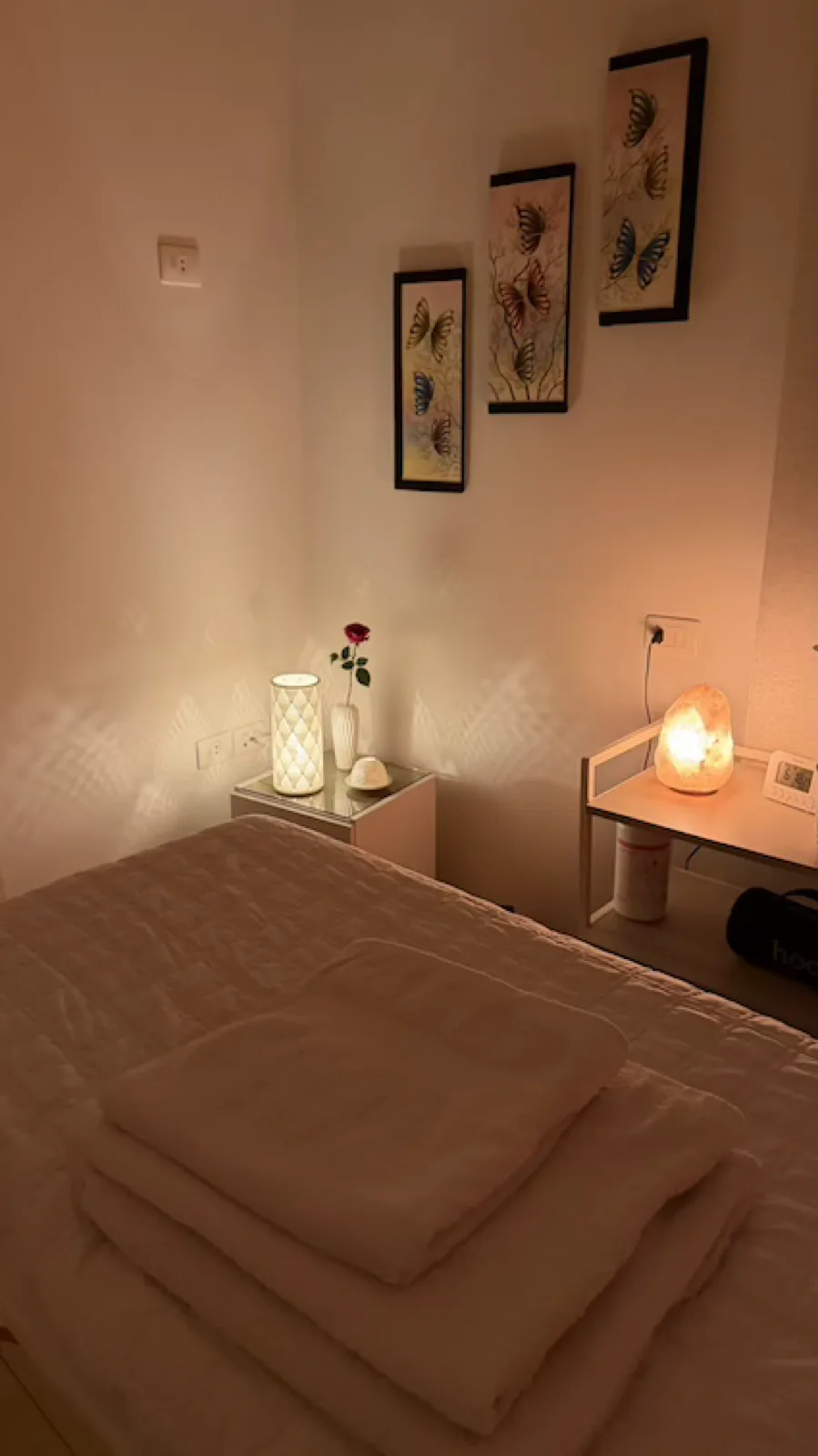
You lie on a table, undressed to your comfort, covered. There is little or no oil, because the practitioner needs to move your skin rather than glide over it.
The pressure is very light — lighter than you would use to stroke a cat. The strokes are slow, rhythmic, repetitive, and stretch the skin in a specific direction. The practitioner works in a fixed order, always clearing the areas nearest the drainage points first — around the collarbones, the neck, the armpits, the groin — before working on the limb or region that is swollen. Emptying downstream before pushing upstream.
An hour of this is extremely soporific. Most people fall asleep.
If it feels like almost nothing is happening, the practitioner is doing it correctly. Firm pressure collapses the small vessels sitting just under the skin and defeats the purpose entirely.
Who it genuinely helps
People with post-surgical swelling, where a surgeon has approved it. Common after cosmetic procedures, and part of standard care in many places after lymph node removal.
People with diagnosed lymphoedema. Here the technique is genuinely part of medical management, usually alongside compression garments and exercise. This needs a therapist with specific training in it, and often a referral.
People with heavy, swollen legs, particularly in summer. Beirut's humid heat makes this a real and seasonal complaint, and drainage helps noticeably.
Late pregnancy swelling in the legs and ankles, with a practitioner trained in pregnancy work.
People after long flights or long immobility. Genuinely useful, and a common reason people book it in their first week here.
People who cannot tolerate firm bodywork — fibromyalgia, chronic fatigue, general pain sensitivity. The lightness that disappoints other clients is exactly the point for these.
People who simply want extraordinary calm. An hour of slow rhythmic light touch is one of the most reliably nervous-system-settling things available. A legitimate reason to book it, as long as you know that is what you are getting.
Who it will not help
Anyone wanting muscular relief. If your shoulder is knotted, this will not touch it. Book deep tissue.
Anyone hoping to lose weight. It does not. Any reduction in measurements is fluid, and it returns. Anyone selling it as weight loss is misleading you.
Anyone hoping to be detoxified. Your liver and kidneys handle that continuously. The word "detox" attached to this treatment is marketing, and it is a reliable signal about the practitioner using it.
Anyone expecting it to cure cellulite. Temporary smoothing from reduced fluid, yes. A cure, no.
When it is not safe
This is one of the few treatments on this site with genuine contraindications, because the technique moves fluid around your body deliberately.
Do not book, or check with a doctor first, if you have:
- Active infection or fever — moving lymph can spread it
- Congestive heart failure — returning more fluid to circulation can overload a struggling heart
- Kidney failure or impaired kidney function
- Deep vein thrombosis or a history of blood clots
- Active, untreated cancer — practice varies and this is a conversation for your oncologist, not your therapist
- Acute inflammation or a recent injury in the area
Tell your practitioner your full medical history and what medication you take. A trained one will ask. If they do not ask, that tells you what you need to know.
What to expect afterwards
You will need the toilet. Repeatedly, over several hours. That is the treatment working and it surprises people who were not warned.
You will be tired. Often quite profoundly for the rest of the day. Do not book it before something demanding.
Drink water. One of the few instances where the standard advice has an obvious mechanism behind it.
Effects are cumulative for swelling. One session gives temporary relief; a series over weeks does more. A practitioner who tells you one session will resolve long-standing lymphoedema is not being straight with you.
How to choose a practitioner
Training matters more here than for most treatments, because a technique this specific is easy to do badly and impossible for a client to evaluate from the table.
Ask which method they trained in — Vodder, Leduc, Casley-Smith and Földi are the recognised ones — and how long the training was. Ask whether they have worked with post-surgical or lymphoedema clients if that is why you are coming.
And listen for the detox claim. Its presence is the fastest way to sort a trained therapist from someone who added it to a menu.
So should you book it?
Book it if you are swollen, puffy, heavy-legged, post-surgical with clearance, or you want the gentlest and most soporific hour on the menu.
Do not book it if you want to be worked on. That is a different treatment and there is no shame in wanting it — just book the right one.
One thing you can do today
Lie on your back and put your legs up against a wall for five minutes. Then, still lying there, breathe slowly and deeply into your belly for twenty breaths.
Gravity and the movement of your diaphragm are two of the main things that move lymph without a pump. It is a crude approximation of the treatment, it costs nothing, and heavy legs at the end of a hot day will notice.