You have arrived in Beirut, the boxes are mostly unpacked, and at some point in the second or third week it lands: you have no idea where to go to look after yourself. No physio, no yoga teacher, nobody who knows your back.
This is a guide to that gap. It is written by a studio, so treat the last section with appropriate suspicion. The rest is what we would tell a friend.
Beirut is better for this than you expect
The city has a genuine wellness scene, and it is older than the current wave of studios. Massage and hammam culture here go back a long way. Yoga arrived properly in the 2000s and now covers most styles you would find in London or Paris. Reiki, breathwork, sound healing and coaching all have serious practitioners.
What it does not have is a directory. There is no Lebanese equivalent of ClassPass that anyone actually uses, no reliable listings site, and a good half of what exists is discoverable only through Instagram or someone telling you.
Which means the ordinary way of finding things — search, read reviews, book — works less well here than you are used to. Word of mouth does most of the work.
What things actually cost
Rough ranges, in US dollars, because that is how almost everything in this sector is quoted:
- Group yoga class: $10 to $20 for a drop-in. Monthly passes bring it down considerably.
- Private yoga: $40 to $70 an hour.
- Massage, 60 minutes: $60 to $100 depending on the type and where you go. Hotel spas run well above that.
- Reiki or energy healing, 60 minutes: $50 to $90.
- Life coaching: $60 to $120 a session, with a lot of variation.
Two practical notes. Cash in dollars is normal and often expected; ask when you book. And prices in this sector have been unstable for years, so anything you read online — including this — may be out of date. Confirm before you go.
Neighbourhoods
Most of what an English or French-speaking newcomer will want sits in a fairly small area.
Achrafieh, including Tabaris, Sassine and Mar Mikhael at its edge, has the highest concentration of studios and practitioners. It is walkable in parts, which in Beirut is worth saying.
Hamra and Ras Beirut skew towards the universities: more affordable, younger, more group classes than one-to-one work.
Badaro and Sodeco have grown a quiet cluster of small independent practices.
Anywhere further out and you are committing to a drive, which in Beirut traffic means you will stop going. Be honest with yourself about this when choosing. The studio you actually attend beats the better studio you do not.
Getting there
Traffic is the real constraint, not distance. A three-kilometre trip can take forty minutes at six in the evening and eight minutes at eleven in the morning.
If you have any flexibility in your day, mid-morning and early afternoon classes are transformatively easier to get to than the 6pm slot everyone wants. They are also quieter.
Bolt and Careem both work here and are how most people move around. Parking in Achrafieh is genuinely difficult; if you drive, ask the studio where to put the car before your first visit rather than circling.
Language
You will be fine in English. Most practitioners working with international clients teach in English, many switch fluently between English, French and Arabic within a single class, and it is entirely normal to ask which language a session will be in when you book.
French is widely spoken and often the first language of the older generation of practitioners. If your French is better than your Arabic, say so — it will frequently be met with relief.
Electricity, and why it matters here
Beirut's power supply is not continuous. Serious venues run generators, and for a yoga studio that is the difference between air conditioning in August and an unusable room.
It is a fair and unembarrassing question to ask before booking a summer class: do you have generator backup? Anyone reputable will answer plainly. The question also quietly tells you how well run a place is.
How to tell whether somewhere is any good
The signals that travel across cultures:
They ask you questions before taking your money. Injuries, medication, pregnancy, what you are hoping for. A place that books you into deep tissue without asking anything is not paying attention.
They tell you what something will not do. The single most useful filter. Anyone promising that energy work will cure a diagnosed illness, or that one massage will fix six years at a desk, is selling rather than treating.
Their teachers have traceable training. Not necessarily a famous lineage, but a name you can look up.
The room is clean and the linen is fresh. Obvious, and it eliminates more places than you would hope.
They are relaxed about you trying one class. Anywhere pushing a ten-session package before you have met the teacher has told you what they are optimising for.
Where to start in your first month
Do not go looking for your permanent practice immediately. Try three or four things, notice which one you find yourself thinking about afterwards, and let the routine build from there.
If you are stressed and sleeping badly — which describes most people in their first two months in a new country — start with something restorative rather than strenuous. Yin yoga, yoga nidra, a slow massage, or reiki. The strong vinyasa class will still be there in six weeks.
If you are physically stiff from travel and boxes, a Swedish or deep tissue massage first, then movement.
If your head is the problem more than your body, breathwork or a coaching session will get further than a stretch will.
The part where we mention ourselves
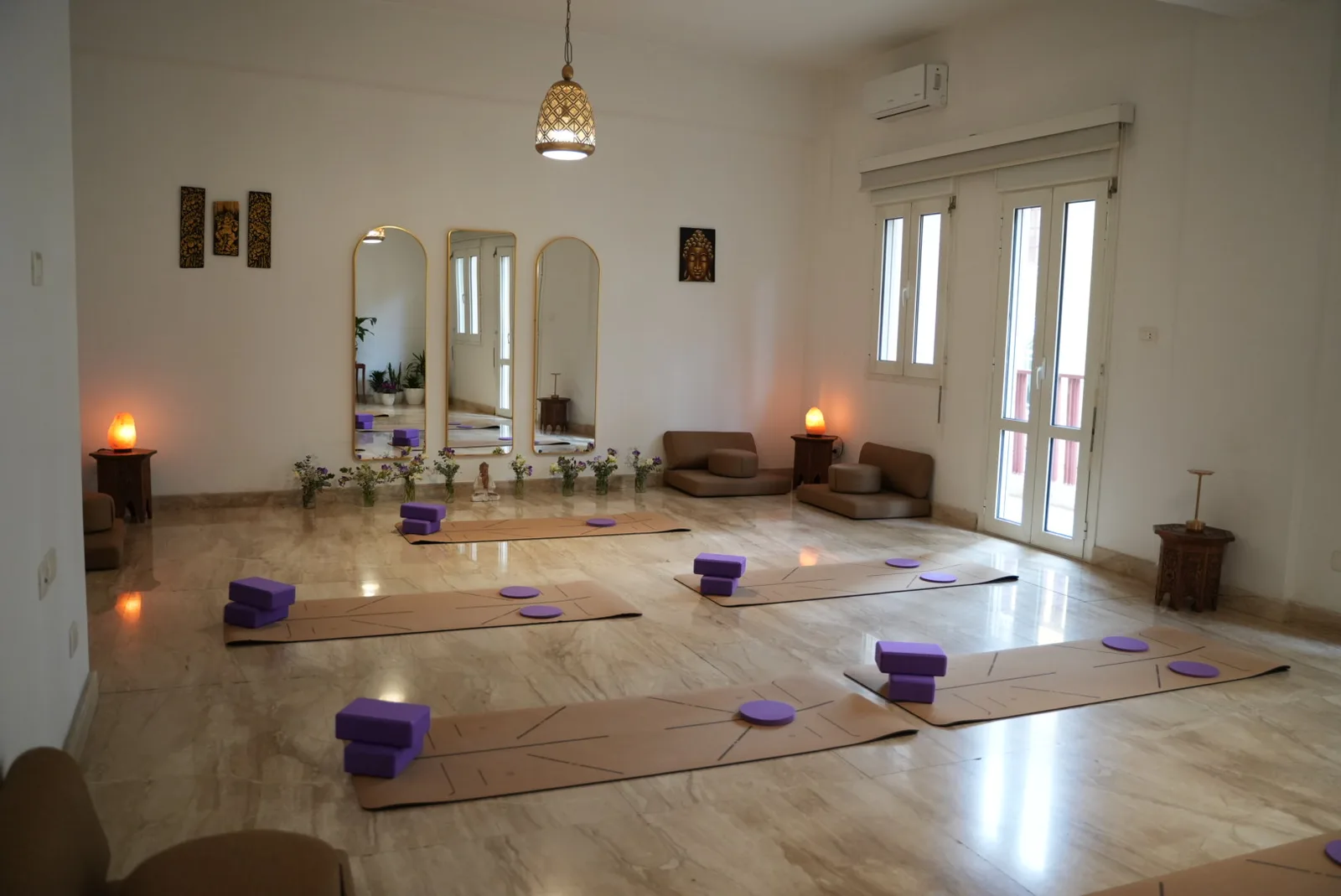
We are a small studio in Tabaris, in Achrafieh. We teach yoga, meditation and breathwork, we do a range of massage and reflexology, and we offer reiki and life coaching. Sessions run in English, French and Arabic. Quite a few of our clients found us in their first month in Beirut, which is partly why this guide exists.
You are welcome to come, and you are equally welcome to use this list to find somewhere else that suits you better. A city where newcomers land somewhere good is better for all of us.
One thing you can do today
Message one person who has lived here longer than you and ask where they go. Not a general recommendation — ask where they personally go and why. That single question will get you further than an evening of searching, and it is how almost everyone in this city finds anything.